
杀马特
“自动驾驶之王”更新美股IPO招股书 预期下周三登陆纳斯达克_我的网站

A |
英特尔在文件中称,该公司计划筹集至多8.2亿美元资金,将用于营运资金和公司用途。英特尔将保留对Mobileye的控制权,该公司将持有超过7.5亿股B类股票,其投票权是A类股票的10倍。
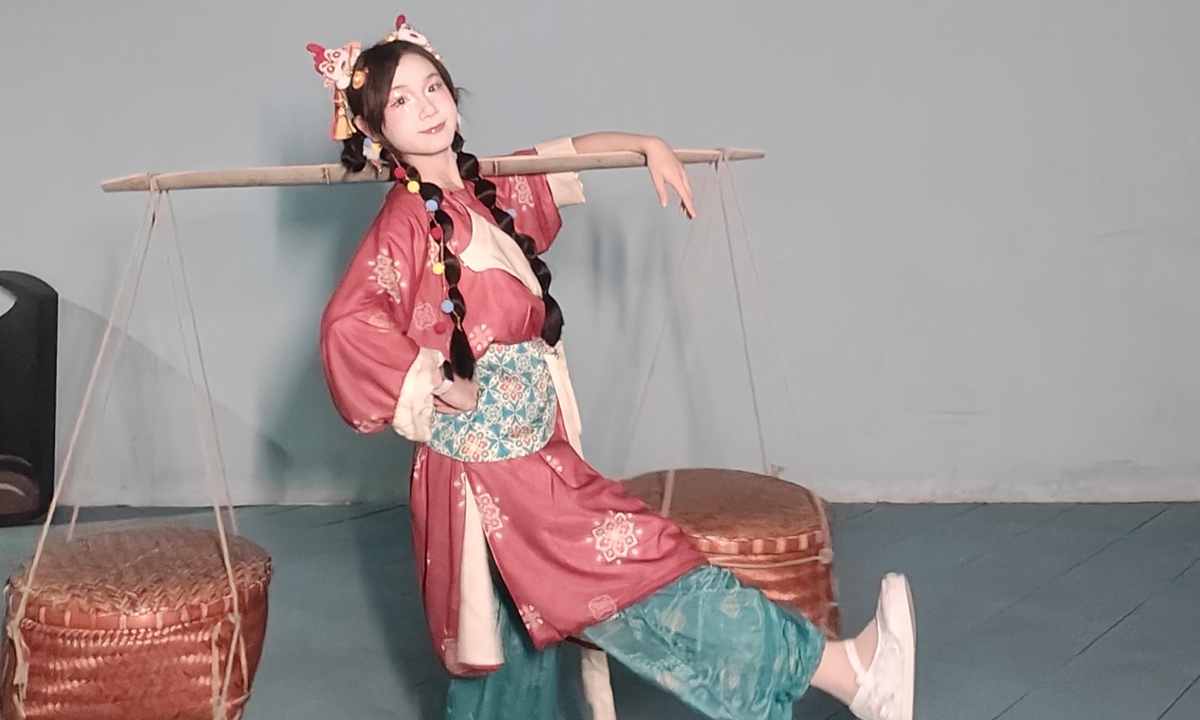
Bing Bing, a young acrobat born in the 2000s, told the Global Times that she first tested the "tossing and eating an apple" routine through short videos before taking it to the stage. After her first performance, she spent the holidays performing it, adjusting the movements and pacing based on how audiences responded.
"Performance is the hardest thing to master. Your facial expressions and body movements have to convey to the audience what you are doing and what you want to do," she said. "The goal is to make them know that you are performing, yet still find it entertaining."
According to Bing Bing, the training behind such performances is far less glamorous than the finished act suggests. "Training is very repetitive. You fail, repeat, fail again, succeed and then fail again," she said. "Practice is what turns quantity into quality, even facial expressions and body movements require deliberate practice."
For Bing Bing, however, mastering the routine is only one part of the job. Once performers step in front of an audience, the carefully rehearsed movements have to adapt to a live and unpredictable setting.
Beyond the theater
In recent years, acrobatic performances have increasingly moved into aquariums, theme parks and cultural tourism venues, where audiences themselves become part of the performance rather than simply watching from fixed seats.
Bing Bing previously performed alongside other clowns at an aquarium, inviting visitors to participate in the act. She said the difference is not merely a change of venue: performers have to constantly interact with the people in front of them.
"Traditional stages are farther away from the audience and are better suited to performances that people simply watch," she said. "Aquariums and theme parks, however, place greater emphasis on interaction and connection with the audience. Even with the same routine and interactions, you can often get unexpected results."
That interaction also changes how performers think about rhythm and presentation. A routine that works in a theater cannot necessarily be transferred unchanged to a tourist attraction, where audience reactions, distance and participation can all alter what happens on stage.
Sun Dawei, head of the Wuqiao Acrobatic School, told the Global Times that this shift is also changing the industry's approach to production.
"Acrobatics used to focus mainly on showcasing skills. Now there is greater emphasis on story-telling and emotional expression," he said. "Performances are no longer confined to theaters, but are increasingly staged as resident shows at cultural tourism venues."
According to Sun, a production usually begins with a theme, followed by the selection of appropriate skills. Performers then refine the routine repeatedly before adding music and stage design and going through multiple rehearsals.
"Traditional signature skills and core fundamentals must be preserved," he said. "Content that simply pursues danger or no longer fits contemporary aesthetics needs to be repackaged. Traditional skills should be given new forms of expression while retaining their roots and appealing to modern audiences."
For Bing Bing, this shift has also been made possible thanks to short-video platforms. Her apple routine gained its first wide exposure online before audiences encountered it in person.
"Short videos have helped more people learn about Chinese acrobatics and traditional culture, and encouraged more people to go to theaters and watch performances offline," she said.
The growing visibility of acrobatics online, however, has raised another question: once traditional skills enter new venues and digital platforms, how can performers avoid simply repeating familiar formulas?
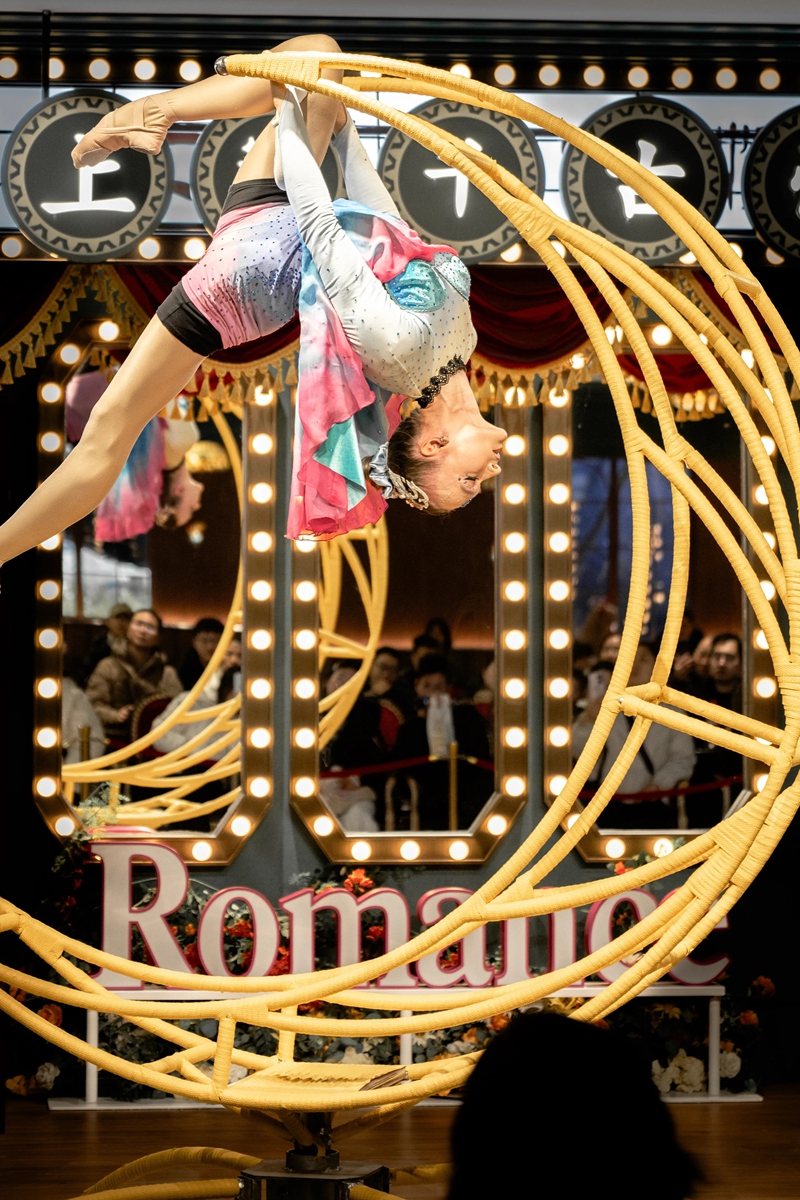
Russian aerial acrobat Liza, who has lived and worked in China for more than seven years and now performs regularly at Shanghai Qianguqing, a large-scale cultural tourism attraction featuring live performances, noted that the answer lies in how a show is constructed as a whole.
"A performance should start with an overall concept, and then you choose the props and music around it. Music itself can guide the choice of movements, provided the performer already has a solid technical foundation," Liza told the Global Times. "The transitions between movements have to be natural and smooth, like telling a story step by step. Costumes are also important because they complete the character. Everything needs to work together."
For Liza, technical difficulty should serve the performance rather than become the performance itself.
"Real professionalism means making the audience unable to see how hard you are working. Everything should look effortless," she said. "I value beauty and precision in movement. You should not make things more complicated simply to show off your skills. You should improve steadily as you grow as a performer, rather than constantly chasing greater difficulty."
She said that this is particularly important as increasingly extreme acts, including hair- and tooth-hanging, attract attention online.
"Most performers are following established templates, and I rarely see people creating something that is truly their own," Liza said. "You can find your own style and way of expression without taking excessive risks."
From an apple-tossing routine that drew more than 6 million likes to performances in aquariums and cultural tourism venues, traditional acrobatics is finding new ways to reach audiences. But bringing an old art back into the spotlight is not simply about making tricks harder or more spectacular. As Bing Bing's apple routine shows, sometimes it takes a familiar skill presented in an unfamiliar way to make a new generation stop and watch again.
。此外,英特尔预计将有4,626万股A类股票流通股,A类股票是投资者将在IPO中购买的股票。具体数量可能会更多,取决于承销商是否决定选择购买额外股票。英特尔预计,Mobileye总计将发行7.9626亿股流通股,如果以20美元定价,自动驾驶业务的估值将高达159亿美元。

B | 英特尔周二股价跌超2%,年初至今跌幅达到48%。2017年,英特尔以153亿美元收购了以色列的Mobileye。成立于1999年的Mobileye为自动驾驶汽车,以及驾驶员辅助等功能提供芯片、硬件和软件。英特尔目前正经历其核心业务——制造计算机芯片的转型。它正在建造更多的工厂,但是建造和装备新的晶圆厂是资本密集型的。Mobileye在文件中称,该公司与奥迪(Audi)、宝马(BMW)和大众(Volkswagen)等汽车制造商有合作关系,其技术目前应用于800款车型。文件显示,Mobileye的营收强劲增长,从2019年的8.79亿美元增长到2021年的13.9亿美元。

C | Mobileye本财年前六个月实现收入8.54亿美元,较上年同期增长21%,该公司净亏损6700万美元。今年以来,由于通胀和利率不断上升、对美国经济的担忧以及美股波动,美国IPO发行受到了沉重打击,尤其是对Mobileye的科技公司同行而言。Dealogic的数据显示,美国IPO市场正在经历有记录以来最糟糕的一年之一,传统IPO的筹资规模可能是1995年以来最少的。美国主要股指均处于熊市,即从近期高点下跌20%或以上。另一个阻碍新上市的因素是:在2020年和2021年上市的大多数公司股价都低于IPO价格,其中许多公司的股价远低于IPO价格。数百家原定于2022年在美国上市的公司现在被迫旁观,因为投资者愿意为它们业务支付的价格下降了。这些公司没有在公开市场上市和融资,而是被迫以低得多的估值寻求私人资金,通过裁员或退出某些市场等其他措施削减成本,或者以远低于预期的估值上市。

D | 这些公司用于增长或招聘的资金减少,这是对美国整体经济的又一个潜在打击。虽然大多数准备在2022年进行IPO的公司都将公开发行推迟到明年,但Mobileye是最大的、众所周知的例外之一。食品杂货快递公司Instacart也定于今年IPO,Mobileye估值的进一步下调对已经削减内部估值的Instacart来说是个坏信号。如果Mobileye的交易表现不佳,这将是对Instacart IPO希望的又一个不祥之兆。

E | 英特尔首席执行长格尔辛格(Pat Gelsinger)曾表示,Mobileye的上市将使其自动驾驶汽车部门获得更高的知名度,并吸引更多业务。他还表示,英特尔不需要Mobileye IPO带来的资金。如今在英伟达、地平线、华为、百度等技术性厂商崛起的背景下,Mobileye自动驾驶芯片一哥的位置实在难保。

F | 包括蔚来、特斯拉、理想在内的一众终端厂商,纷纷抛弃了Mobileye。特斯拉更不必说,在英特尔收购Mobileye之后,便与Mobileye分手,开始采用FSD芯片。理想在2021年也将EyeQ4换装成地平线征程3,而蔚来等一批车企更是为新一代车型选配了强大的英伟达Orin芯片。

G | 前段时间英伟达刚研发出算力“天花板”Thor,Mobileye这些老企业还有一席之地吗?不过Mobileye也发现了这些问题,正在进行下一代ADAS的产品开发,包括 SuperVision 系统的新功能以及导航辅助驾驶,希望能打破“英姿不再”的僵局。
Current article:http://nxda4a4.linxiuhuaishuangniuzhenrua.bond/npdqt0/9th1.html
Published on:16:24:23
绿野_Random reading
- 08-20Beijing's Jan–July exports hit record high
- 08-20Etawah News : कबाड़ के बीच छिपाकर ले जा रहे थे 33 लाख का गांजा, पुलिस ने ऐसे कसा शिकंजा
- 08-23央视《新闻联播》:山东打造商业航天产业高地
- 08-20中国发布第五批50个公共数据“跑起来”示范场景,中国发布第五批50个公共数据“跑起来”示范场景
- 08-26新西兰女尸悬案,身上一器官曾切除过!30至50岁之间…
- 08-23吉林省政府原党组成员、秘书长刘化文接受审查调查
- 08-20金斯顿发布A2000/KC2000系列SSD:64 3D TLC,SMI主控
- 08-25亚马逊股东担心贝索斯离婚或失去一半的财产。
- 08-20顺心顺意,即刻精彩!扫码参与顶呱刮互动赢惊喜好礼
- 08-25深圳小学数学试卷难上热搜:有家长85分钟才做完,中学数学老师:我都写不完!网友:四年级正是考公的年纪!

呵呵_Active users
- 午间涨跌停股分析:41只涨停股、9只跌停股,煤炭概念活跃,美锦能源4天2板,上海能源涨停
- 创业板指跌逾1%
- 【丁荷·趣】楼梯上的“折叠”餐厅——枣园中二班项目活动
- Kayhan Space正在通过为卫星提供及时、自动的碰撞警告使轨道更加安全
- 高通公司Apple积极向上:每部iPhone收取7.50美元的专利许可费。
- 拜顿M字节电动汽车CES 2019现场照片:前排最宽的中央控制屏幕
- 杭州首个千吨级内河港海关监管场所通关启用 下沙港成为外贸企业“家门口一站式出海口”
- B'desh tops apparel export growth to EU
- 一紧张就拉肚子?这种“情绪病”专盯年轻人!
- 跑者:你们分床睡觉吗?
- 海大集团:海外项目正集中加快建设
- 走进全国Olé精品超市|伯香村黄庄月饼,传统酥味登陆高端消费场景
- 被辟谣的“取消中考”,能走进现实吗
- Sonu Sood, Wamiqa Gabbi and More Lend Support to IndiGo Ground Staff Amid Chaos
- Mayor says West Maui to reopen to tourism on Nov. 1 after fire
- 杭州体育发展“十五五”规划发布
- 3500万加盟维拉!英超首位日本门将,上演生涯5年4级跳
- 里奇·保罗:克莱加盟热火后 热火将成东部争冠大热
晓说_Hottest this week
- 杀马特 copyright
- Some of the content comes from the Internet. If you have any offence, please raise it.